The fire drill everyone remembers is the one that felt like a formality. People file out, chat in the car park, sign a sheet, and go back to work. It ticks a box. What it rarely does is prepare anyone for the thing it’s supposed to: a real evacuation, where the corridor is filling with smoke, the lights are out, and the calm walk to the exit becomes a disoriented scramble. The gap between the orderly drill and the chaotic reality is exactly where VR safety training for fire evacuation earns its place.
Why the standard drill underprepares people
A conventional evacuation drill happens in ideal conditions — good light, clear air, no real urgency. That’s the problem. The brain files it as a routine walk to the door, not as an emergency, so when a real fire removes the light, the air, and the calm, people are meeting those conditions for the first time at the worst possible moment. They’ve practised the route, but only the easy version of it.
And real fires change everything about how a space behaves. Smoke destroys visibility and forces people low. Familiar landmarks disappear. The nearest exit may be blocked, demanding a decision nobody rehearsed. Panic compresses thinking. None of this is captured by an annual walk-out, which means the most decisive factors in a real evacuation are the ones least practised.
What VR can put a worker inside
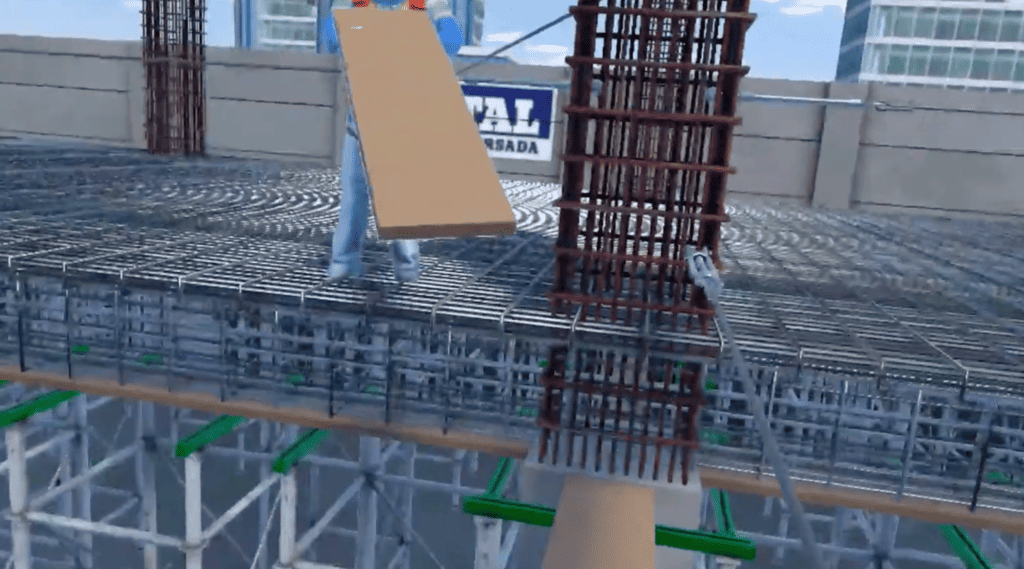
Immersive training closes that gap by reproducing the conditions a drill can’t. A VR fire evacuation scenario can fill a space with smoke, kill the lighting, block the obvious exit, and make a worker find their way out under pressure — repeatedly, in a faithful model of their actual workplace, with zero real danger.
Indonesian developer VGLANT builds exactly this kind of scenario — staying low under smoke, finding the route when the primary exit is gone, moving with urgency without losing control. The point isn’t to frighten people; it’s to make the experience familiar. A worker who has evacuated their building under simulated smoke ten times doesn’t meet a real fire as a stranger to it. The route and the composure are already built in.
The calm is the real skill
The deepest value isn’t the route — it’s the response. The first time someone experiences the disorientation of a smoke-filled space, the shock itself is dangerous; it’s what turns a trained person into a frozen one. A worker who has rehearsed that disorientation has already learned to stay low, keep moving, and trust the route when their eyes give them almost nothing. That trained calm, more than any map, is what gets people out.
Where the drill still matters
VR doesn’t replace the physical evacuation drill entirely. People still need to know the muster point, the headcount process, and the real building, and live drills test things a headset can’t — like whether the actual doors and alarms work as expected. The two are complementary.
But VR fixes the specific weakness at the heart of evacuation readiness: that people rehearse the easy version and face the hard one for real. By drilling the smoke, the dark, and the blocked exit safely and often, it turns evacuation from a formality into a reflex — so that when seconds are all there is, nobody wastes them being surprised.
The exit sign tells you where to go. VR is what makes sure you can still get there when you can’t see it.