Buying boots off the shelf is simple. You find a pair, you pick a size, you are done. Designing your own sounds like a different category of activity altogether, the kind of thing reserved for people with strong opinions about welt thickness and a budget to match.
In practice it is far less intimidating than it sounds. Most made-to-order programmes are not asking you to invent a boot from nothing. They hand you an existing model and let you make a series of choices about it, each one narrowing down to a pair that is specifically yours. There are usually about six decisions, and understanding what each one actually changes is most of the battle. Here is how to think about them.
1. Start With the Model, Not the Details
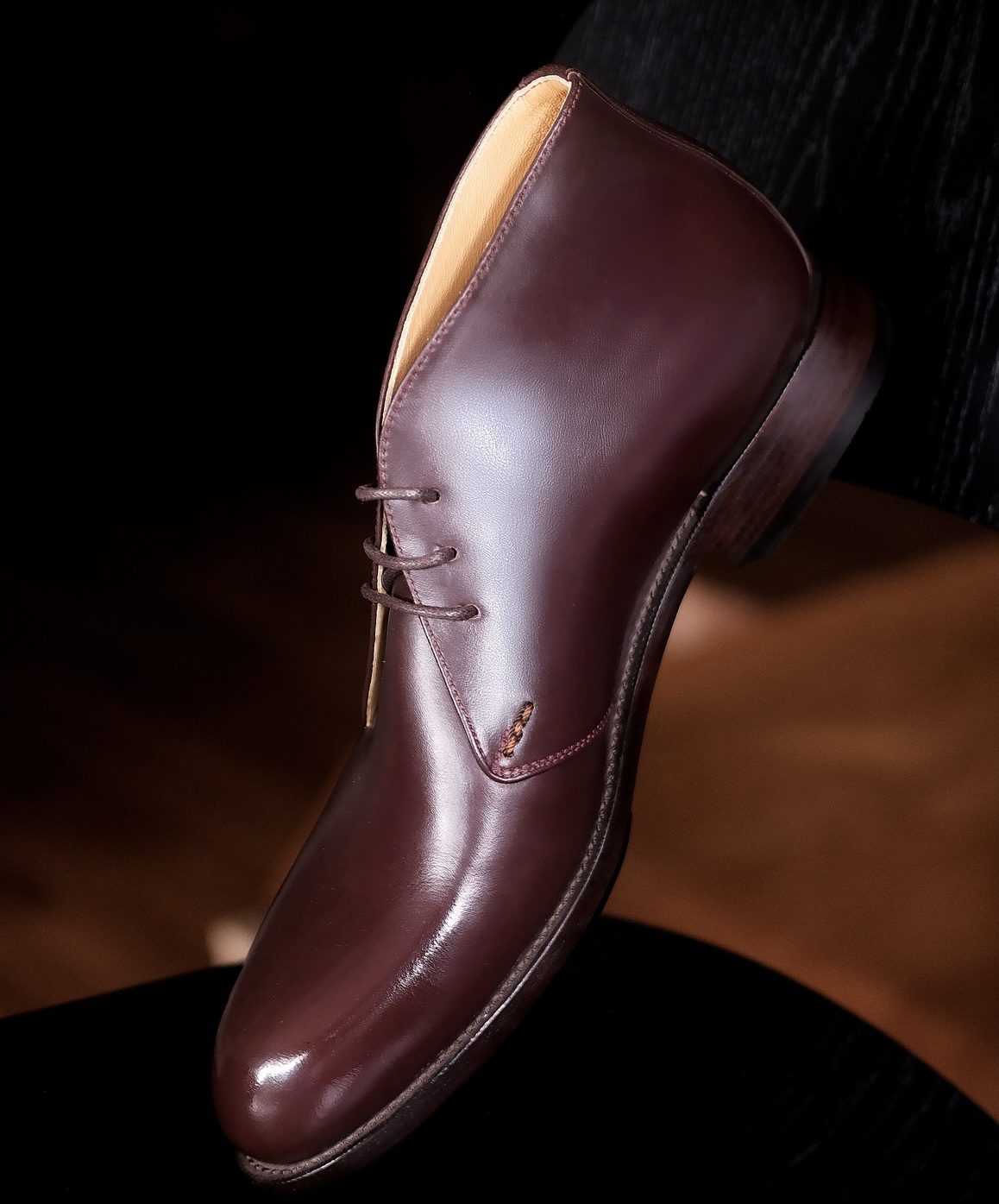
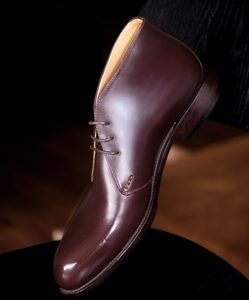
The first decision is the silhouette, and it should be the one you spend the most time on. Every other choice sits on top of it. A service boot, a cap-toe, a Chelsea, a moc-toe: these are fundamentally different objects, and no amount of clever leather selection will turn one into another.
The useful question is not which looks best in isolation but which you will actually reach for. Be honest about your wardrobe and your week. A rugged work-boot silhouette is a joy to look at and slightly awkward with tailored trousers. A sleeker profile dresses up well and looks underpowered with heavy workwear. Pick the one that fits the gap in your rotation, not the one that photographs best. Get this right and the rest of the process is refinement. Get it wrong and no detail will rescue it.
2. Leather: The Choice That Changes Everything
Leather is where most people spend the longest, and rightly so, because it determines how the boot looks on day one and how it ages over years. The main thing to understand is the difference between leather types rather than colours.
Pull-up leathers are stuffed with oils and wax, so they lighten at flex points and develop dramatic character with wear. Smooth calf and similar dress leathers stay more uniform and take a polish well. Suede and roughout are matte and casual, and behave differently in wet weather. Shell cordovan is the expensive outlier, dense and glossy with a distinctive roll rather than fine creasing. Colour matters, but leather type matters more, because it decides whether your boots will look broadly the same in five years or completely transformed. Ask for swatch photographs if the maker offers them, since screen colour is unreliable.
3. Hardware and Details: Small Parts, Long Life
Next come the fittings: eyelets, D-rings, speed hooks, and the finish on them. This feels like a minor aesthetic choice and is partly a functional one.
The functional element is how you get in and out of the boot. Eyelets alone are clean and slow. D-rings and hooks are faster and make heel-lock lacing possible. If you wear boots daily, that convenience compounds. On the material, solid brass is the choice worth paying for over plated metal, particularly in humid climates, because plating eventually wears through to the base metal underneath while brass simply patinas. Also consider the tongue: a gusseted tongue, stitched to the sides, keeps water and debris out and is worth specifying on anything you will wear outdoors.
4. Outsole: Decide Where You Will Wear Them
The outsole is a practical decision dressed up as an aesthetic one. Leather soles look elegant, breathe well, and are slippery in the wet. Rubber lug soles grip properly, last longer, and add visual weight. Wedge soles are comfortable and casual. Half-rubber options split the difference.
Pick based on climate and use rather than looks. In wet or humid conditions, a rubber outsole from a maker like Vibram is the sensible default, and the range of profiles is wide enough that you are not locked into a heavy tread. Remember this choice is not permanent: on a welted boot the outsole is replaceable, so if you change your mind in three years a cobbler can fit something different. That makes it the lowest-stakes decision on the list.
5. Construction: How It Is Held Together
Some programmes let you choose the construction method, and it is worth understanding what you are picking between. Goodyear welted is the robust, repairable standard. Handwelted is the same principle done entirely by hand, slower and more expensive. Norwegian or chain-stitched construction flares the upper outward with visible stitching on the welt, producing a bulkier, tougher, more water-resistant boot.
The choice affects price, break-in, silhouette and weather performance. If you want the sleekest profile, stay with a standard welt. If you want maximum ruggedness and do not mind the bulk, Norwegian earns its keep. If you simply want the best-made version of a classic boot, handwelted is the answer. There is no universally correct option, only the one that matches how you intend to wear them.
6. Last and Sizing: The Part That Actually Matters
Leave the most important decision for last in the reading, not in the process. The last is the foot-shaped form the boot is built around, and it determines fit more than the size number does. Two boots in the same size on different lasts can fit entirely differently.
Makers usually publish guidance on which of their lasts runs wider, narrower, higher in volume or more tapered at the toe, and reading it properly is the single highest-value thing you can do. Measure both feet, since most people have a size difference, and take advantage of it if the maker allows different sizes for left and right. TXTURE‘s By Request programme is a reasonable model of how this should work: it separates the choices into article, leather, hardware, outsole and construction, and provides a last guide and sizing information rather than leaving you to guess. If a maker will not tell you how their lasts differ, that is worth noticing.
Fewer Decisions Than It Looks
Six choices, made in order, with the silhouette first and the last taken seriously. That is the whole process. The common mistakes are predictable: over-thinking colour, under-thinking fit, and choosing a silhouette that photographs well but does not suit your wardrobe. Avoid those three and a made-to-order pair is a genuinely enjoyable thing to commission, and usually costs less than people assume.