Many mining companies operate a command centre or control room that monitors activity on site. Some of these are located at the mine. Others are remote operations centres that oversee one or more sites from a city office. In both cases, staff need a clear and current picture of what is happening across the operation. A digital twin is one tool used to provide it.
This article explains the role of a command centre, the limits of working with separate systems and what a digital twin can add.
The Role of a Mine Command Centre
A mine command centre typically handles tasks such as:
- monitoring equipment location and status
- dispatching trucks and coordinating loading units
- tracking production against plan
- responding to delays, breakdowns and incidents
- coordinating with maintenance, safety and planning teams
To do this, control room staff often work with several separate systems: fleet management software, production reports, maintenance systems, communication tools and maps.
The Problem of Separate Systems
When information sits in separate systems, staff must combine it themselves. A truck delay may appear in the FMS, while the road condition causing it is known only to the field crew, and the location may be shown on a separate map. Combining these pieces takes time.
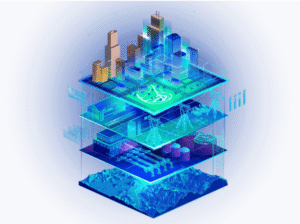
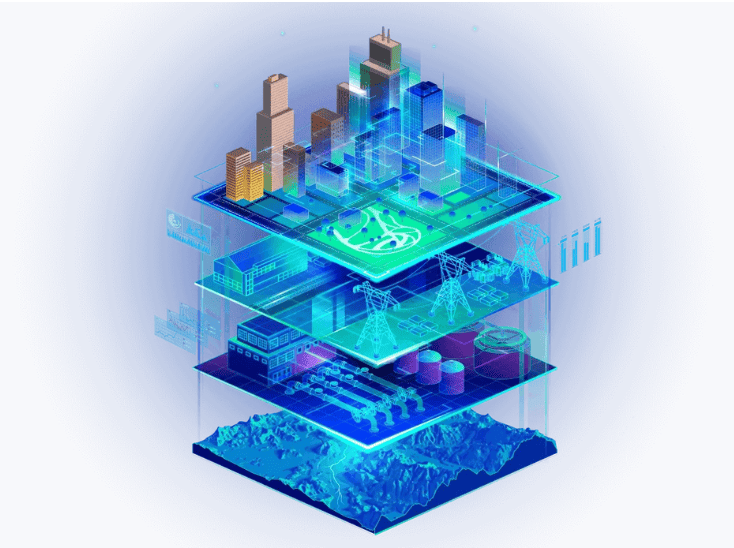
A digital twin places information from several sources into a single spatial view of the site.
What a Digital Twin Provides
Virtu’s digital twin service lists four main features:
- 3D visualisation, giving an overview of assets and systems
- Real-time monitoring and alerts, providing contextual information
- Historical playback and auditing, with timestamped replay
- Predictive maintenance and planning, aimed at preventing downtime
For a mine command centre, this means staff can see equipment positions and status on a current model of the terrain, receive alerts in the context of their location and review past events when needed.
Virtu states that command centres can use the mining digital twin to make tactical decisions faster.
Example Information Views
Depending on the data integrated, command centre staff may use views such as:
- the live position and status of all mobile equipment
- average road speeds by segment, shown in colour
- concentrations of trucks indicating queues or congestion
- locations of active loading and dumping
- recent terrain changes from the latest survey
Virtu’s Smart Digital Twin Mining project for Petrosea combined a drone LiDAR terrain map with live Fleet Management System data, giving a single view of vehicle locations, routes and status.
Access Beyond the Control Room
Not every decision is made in the control room. Supervisors in the field and managers in other offices also need information. Virtu’s Petrosea project was delivered on three platforms: web, mobile app and mixed reality. Web access suits office users. Mobile access suits supervisors on site. Mixed reality can present the 3D model as a hologram for discussions and briefings.
Using Playback for Shift Handover and Review
Timestamped playback can support routine command centre work:
- Shift handover. The incoming shift can review key events from the previous shift.
- Incident review. Teams can see equipment positions and movements before and after an event.
- Performance review. Recurring delays can be examined by location and time.
Considerations Before Implementation
Adding a digital twin to a command centre requires planning:
- which systems will feed data into the twin
- how often data will be updated
- which alerts are useful and which would create unnecessary noise
- how the twin fits into existing control room procedures
- training for staff who will use it
A digital twin should support existing workflows rather than add another screen that staff must monitor separately. Involving control room staff in the design helps achieve this.
Limitations
A digital twin displays the data it receives. If equipment is not reporting, or if data is delayed, the view will be incomplete. Radio communication, field reports and established procedures remain essential.
Summary
A digital twin can give mine command centres a unified, current view of site activity and a record that can be replayed. Its usefulness depends on reliable data and integration into control room routines. Mining companies interested in a digital twin for their command centre can contact Virtu to discuss their operation.