

Falls from height are a recognised cause of serious injury in construction, maintenance and industrial work. Personal fall protection equipment can prevent or limit injury, but only if workers select, connect and use it correctly. This article explains the main components of a personal fall arrest system and how VR training helps workers learn to use them.
Regulation in Indonesia
In Indonesia, occupational safety for work at height is regulated by Minister of Manpower Regulation No. 9 of 2016 on Occupational Safety and Health in Work at Height. The regulation covers planning, procedures, equipment, worker competence and the need for fall protection when working at height. Employers are responsible for ensuring that workers are trained and equipped for the tasks they perform.
The ABC of Fall Arrest
A personal fall arrest system is often explained using three components: anchor, body harness and connector.
Anchor
The anchor is the secure point to which the system is attached. It may be a purpose-built anchor point, a structural member or an engineered lifeline. An anchor must be strong enough to hold the forces generated by a fall. Workers must not attach to items such as pipes, guardrails or cable trays unless they are confirmed as suitable anchors.
Anchor position also matters. An anchor located above the worker generally reduces fall distance and swing.
Body Harness
A full body harness distributes the forces of a fall across the thighs, pelvis, chest and shoulders. It must fit correctly. Common checks include:
- leg straps adjusted so they are snug
- chest strap positioned across the chest
- the rear attachment point located between the shoulder blades
- all buckles fastened correctly
A poorly fitted harness can reduce protection during a fall.
Harnesses come in different sizes and designs. Workers should use a harness that fits their body size and is suitable for the task, and should check the fit each time they put it on.
Connector
The connector links the harness to the anchor. Common types include energy-absorbing lanyards and self-retracting lifelines. Connectors usually include locking hooks or karabiners that must be fully closed and locked.
Workers must also consider fall clearance: the distance needed below the worker for the system to stop a fall before the worker strikes a lower level or obstruction.
Other Elements of Fall Protection
Fall arrest is one part of a wider approach. Other measures include:
- eliminating the need to work at height where possible
- using guardrails and work platforms
- using fall restraint systems that prevent a worker from reaching an edge
- planning rescue before work begins
How VR Training Teaches These Components
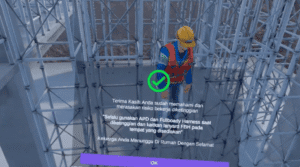
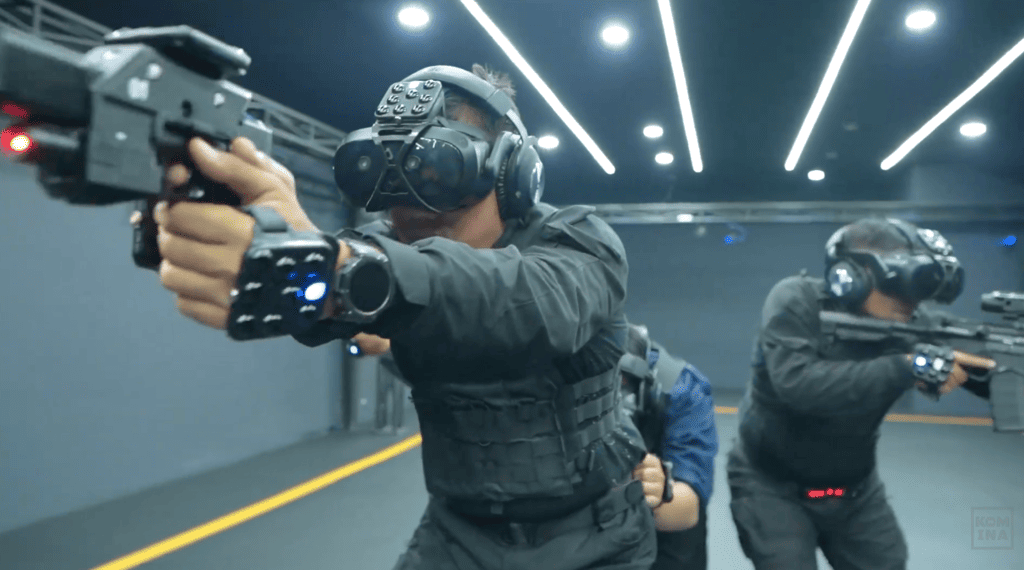
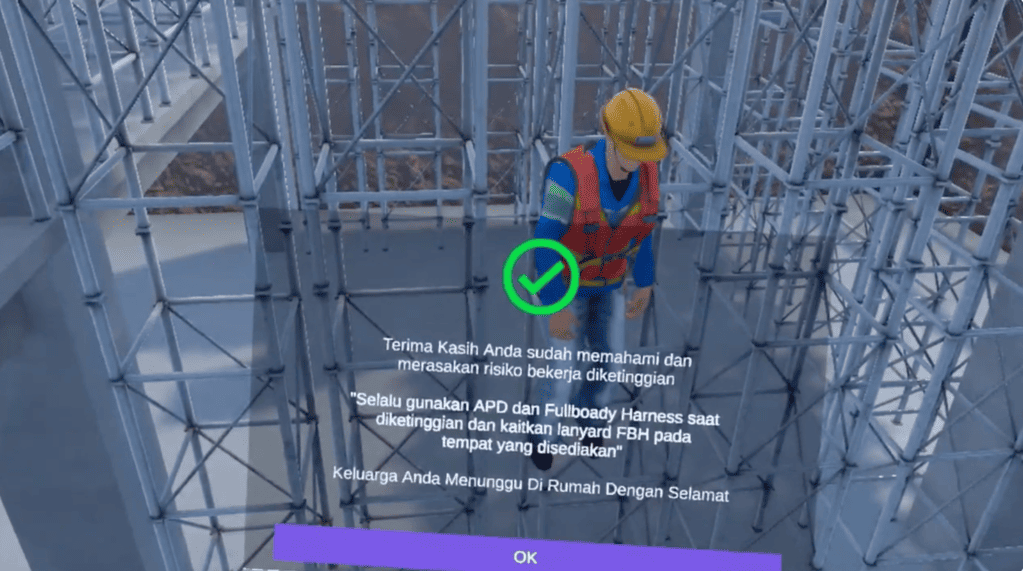
VGLANT lists work at height among its VR safety modules. VR training allows workers to practise equipment decisions in a simulated environment at height without the risk of a real fall.
Depending on the scenario, VR training can require workers to:
- select appropriate equipment for a task
- identify suitable and unsuitable anchor points
- connect to an anchor before moving into an exposed area
- maintain connection while moving between points
- recognise situations where fall clearance is insufficient
VGLANT describes its training as zero risk and immersive. It also states that immersion is intended to produce realistic psychological and physiological responses, which is relevant to height work, where the visual experience of height can affect behaviour.
Tracking What Workers Do
VGLANT’s platform records metrics such as task duration, reaction time and actions taken. For fall protection training, this can show whether a worker connected before reaching the edge, chose a suitable anchor or disconnected at an unsafe moment.
VGLANT’s process includes converting existing SOPs into VR scenarios. This allows the training to follow the organisation’s own work at height procedures and equipment.
Limits of VR Training
VR does not replace hands-on training with real harnesses, inspection of real equipment or certification required for specific roles. Workers must still practise donning and adjusting real harnesses under supervision.
Summary
Correct use of anchors, harnesses and connectors is central to fall protection. VR training gives workers a safe place to practise these decisions and gives supervisors a record of each attempt. Organisations interested in VR work at height training can contact VGLANT for a demonstration.